
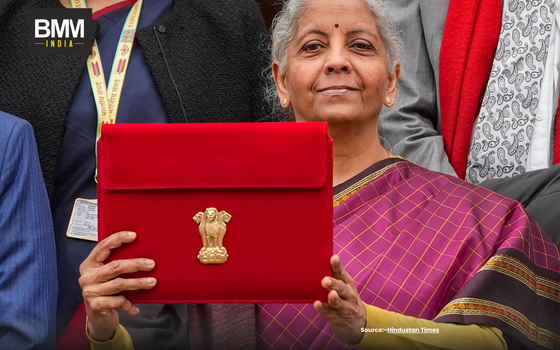
The Union Budget 2026–27 arrives at a moment when India is balancing growth ambitions, geopolitical realities, and domestic affordability. Presented in Parliament by Finance Minister Nirmala Sitharaman, the budget sends a clear signal: manufacturing depth, strategic self-reliance, and long-term capability building will take precedence, even if that means short-term price pressures in select areas.
This budget changes the incentives for households, investors, businesses, and farmers in small but important ways. Some things will cost less, and some things will cost more. Many policy decisions show where the government wants India to go in the next ten years.
Union Budget 2026–27 Says What Gets Cheaper for Consumers?
One of the most immediate impacts of the Union Budget 2026–27 is through customs duty reductions and tariff rationalisation. Several items used in daily life, healthcare, clean energy, and education are expected to become more affordable.
1. Personal-use imported goods
One of the most important things that are included is personal-use imported goods. These should cost less because customs duties will be lower. This is especially important for Indians who buy electronics or other specialized goods from other countries.
2. Healthcare
gets a big boost in affordability. Seventeen cancer drugs and medicines and Food for Special Medical Purposes for seven rare diseases will cost less. This fits with the government’s larger goal of making long-term and life-saving treatments less expensive.
3. Clean energy and technologies
that look to the future also benefit. Lithium-ion cells, solar glass, important minerals, and parts for making airplanes will all be cheaper, which will help India reach its goals in electric vehicles, renewable energy, and aerospace manufacturing. Even common appliances, like microwave ovens, are in the cheaper group.
4. Costs for education
may also go down. Changes in import duties and other fees are likely to make overseas tour packages and the costs of going to school abroad more affordable.
Union Budget 2026–27 says What Gets Costlier and Why?
Not everything comes with relief. The Union Budget 2026–27 deliberately raises costs in areas associated with speculation, consumption externalities, and resource extraction.
The government has always used taxes to lower consumption and raise money, and now alcohol and cigarettes will cost more. Stock options, futures trading, and lying about income tax will also cost more. This is a clear sign that financial markets and compliance will be stricter.
Iron ore, coal, and parts for nuclear power projects are all expected to cost more. This is a mix of environmental concerns, revenue goals, and a change in the way energy inputs are used strategically.
It’s clear that shortcuts, guessing, and not being clear are all getting more expensive.
Will Wine Get Cheaper Despite Higher Alcohol Taxes?
It’s interesting that wine and some other alcoholic drinks might help a little. This isn’t because of domestic tax policy; it’s because of trade diplomacy.
The India–European Union free trade agreement will lower or get rid of tariffs on 96.6% of EU exports. Because of this, the prices of some spirits, wine, and beer that are brought into India from Europe may go down. Kiwi, pears, fruit juices, non-alcoholic beer, and processed foods are some other things that might get cheaper.
So, even though alcohol from the US is taxed more, European wine that comes in may not follow the trend.
Manufacturing Takes Centre Stage
The clearest policy signal in the Union Budget 2026–27 comes early in the speech. Under the first kartavya of accelerating growth, the Finance Minister commits to scaling up manufacturing across seven priority sectors.
Biopharma is a big deal. The budget starts Biopharma SHAKTI with ₹10,000 crore over five years. This is because India’s disease burden is shifting toward non-communicable diseases. The goal is to improve the country’s ability to make biologics and biosimilars, improve the infrastructure for clinical trials, and make the Central Drugs Standard Control Organization stronger by adding a dedicated scientific review team.
There is another strong push for semiconductors and electronics. The second phase of the India Semiconductor Mission begins. It now includes more than just making things; it also includes equipment, materials, Indian intellectual property, and training for workers. The Electronics Components Manufacturing Scheme’s budget goes up from ₹22,919 crore to ₹40,000 crore after getting investments that were much higher than expected.
Rare Earths and the Geopolitical Turn
Rare earths bring together manufacturing goals and geopolitics. The budget puts the Rare Earth Permanent Magnets plan into action and suggests building Rare Earth Corridors in states with a lot of minerals, like Odisha, Kerala, Andhra Pradesh, and Tamil Nadu.
These corridors will integrate mining, processing, research, and downstream manufacturing, helping India secure access to materials critical for electronics, clean energy, and advanced manufacturing. This is one of the most strategic elements of the Union Budget 2026–27, reflecting lessons from global supply chain disruptions.
SMEs, Chemicals, and Capital Support
The budget suggests building three Chemical Parks to help domestic supply chains. These parks would help reduce reliance on imports in sectors that support pharmaceuticals, electronics, energy, and infrastructure.
Small and medium-sized businesses also get some attention. The Self-Reliant India Fund will get an extra ₹2,000 crore, and the SME Growth Fund will give equity support to high-potential MSMEs. This makes the point that Indian businesses now want to grow, not just stay alive.
The Rise of the Orange Economy
A fresh concept quietly introduced in the Union Budget 2026–27 is the “orange economy,” covering creative industries such as music, film, design, gaming, and live entertainment.
The budget suggests that the Indian Institute of Creative Technologies in Mumbai help set up AVGC Content Creator Labs in 15,000 schools and 500 colleges. Students will learn how to animate, make special effects, use augmented reality (AR), virtual reality (VR), and make digital content in these labs.
The data from around the world backs up the economic logic. UNCTAD says that creative industries make up between 0.5% and more than 7% of GDP in different countries. India is getting ready early to take advantage of this growing job market.
Agriculture and Smarter Income Growth
Agriculture still employs nearly half of India’s population, even though its GDP share has fallen to around 18 percent. The budget focuses on raising incomes through high-value crops rather than endlessly increasing subsidies.
Coconut farming gets special attention through a proposed Coconut Promotion Scheme aimed at replacing ageing trees with higher-yielding varieties. There is also targeted support for region-specific crops such as sandalwood, cashew, agarwood, and cocoa.
Technology plays a role too. Bharat-VISTAAR, a multilingual AI tool, will integrate AgriStack data with ICAR knowledge to provide farmers with localised, language-specific advice.
Markets, Taxes, and Investor Signals
On the financial side, the Union Budget 2026–27 avoids changes to personal income tax slabs but tightens market discipline. Securities Transaction Tax sees a sharp hike, particularly on futures and options. Buyback taxation is rationalised to remove long-standing arbitrage between promoters and public shareholders.
Compliance is eased in some areas, such as simpler TDS processes for property purchases from NRIs, while disclosure norms for foreign assets are tightened.
The Bigger Picture
The Union Budget 2026–27 sends a clear message, even though Prime Minister Narendra Modi praised it and the Indian National Congress criticized it for not being impressive.
Long-term ability, strategic manufacturing, disciplined markets, and skills that are ready for the future are more important than short-term populism. This budget quietly changes the incentives and expectations for consumers, businesses, and investors, even though its full effects won’t be clear for a while.
Also Read :- Fitch Calls India Budget 2026 Broadly Neutral for Growth