
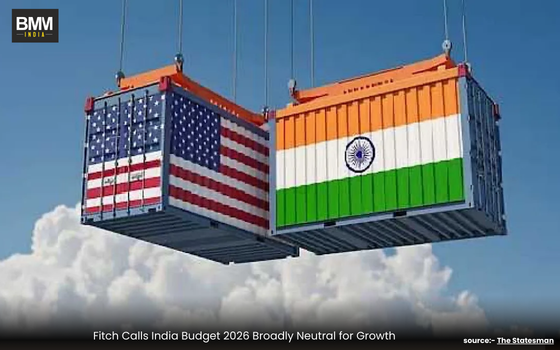
The India-US trade deal announced on Monday marks a significant shift in economic and strategic relations between the United States and India. U.S. President Donald Trump revealed that Washington would sharply reduce tariffs on Indian goods in exchange for major policy and purchasing commitments from New Delhi. The announcement followed a direct phone call with Indian Prime Minister Narendra Modi, setting off strong reactions across financial markets and diplomatic circles.
Key Features of the India-US Trade Deal
At the core of the India-US trade deal is a dramatic reduction in U.S. tariffs on Indian exports. According to the announcement, the effective tariff rate on Indian goods will fall to 18 percent from a combined level that had reached 50 percent. This includes the removal of a punitive duty that had been imposed on India’s continued purchases of Russian oil, along with a reduction in the reciprocal tariff structure.
India has promised to lower its own tariffs and other trade barriers against U.S. goods in exchange. Trump said that India would work to get rid of these barriers completely, which would make its market more open to American companies in many areas.
Energy Commitments and Strategic Shifts
Energy cooperation is a central pillar of the India-US trade deal. Trump said India would significantly increase its purchases of U.S. energy, including oil, gas and coal, while scaling back reliance on Russian crude. He added that India may also diversify energy imports through alternative suppliers, including Venezuela.
Trump said that India would buy more than $500 billion worth of U.S. energy products over time. Indian officials have welcomed the larger trade deal, but official statements from New Delhi have mostly been about trade and investment so far, not about specific energy timelines.
Market Reaction and Investor Confidence
Global markets reacted swiftly and positively to the India-US trade deal. U.S. listed shares of major Indian companies surged following the announcement, reflecting investor optimism about improved access to the American market and lower trade friction. Banking, information technology and consulting firms led the rally, while exchange-traded funds tracking Indian equities also moved higher.
The announcement also helped the U.S. markets as a whole, giving stocks related to artificial intelligence, semiconductors, and global trade a boost. Investors saw the deal as a sign that geopolitical risk was lower and that two of the world’s largest economies were working together better.
Background to the Agreement
Before the India-US trade deal, trade relations between the two countries had grown increasingly tense. India had some of the world’s highest applied tariff rates until recent years, while U.S. tariff hikes under Trump’s return to office pushed bilateral trade into a more confrontational phase. The additional duties linked to Russian oil purchases further strained ties.
The new agreement appears designed to reverse that trend, signaling a willingness on both sides to prioritize strategic alignment and economic growth over prolonged trade disputes.
Lack of Formal Documentation Raises Questions
Even though the announcement used strong language, there are still some things about the India-US trade deal that aren’t clear. As of late Monday, there had been no official presidential proclamation or regulatory notice to make the changes to the tariffs legally binding. There is also no set start date for the new tariff rates or a set end date for India’s energy commitments.
Officials from both governments have not yet made public a detailed plan that explains how the rules will be enforced, what concessions will be made in each sector, or how the rules will be checked.
What Comes Next?
The trade deal between India and the US is a big deal for both politics and the economy, but its effects in the long run will depend on how it is carried out. Experts in trade say that more talks will be needed to turn broad promises into policies that can be put into action. The announcement has already changed how people think about U.S.-India relations, though.
If the India-US trade deal goes through, it could change supply chains, energy partnerships, and investment flows. This would strengthen the strategic partnership between the two democracies in a world economy that is becoming more unstable.
Also Read :- Fitch Calls India Budget 2026 Broadly Neutral for Growth