
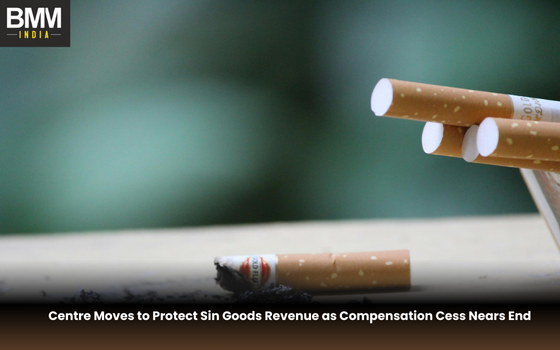
On Monday, Finance Minister Nirmala Sitharaman introduced two important bills in the Lok Sabha. The bills are meant to stop the prices of sin goods like tobacco products and pan masala from going down after the GST compensation cess is taken away. The proposed laws would give the government new powers to charge an excise duty on tobacco and a new health and national security cess on pan masala. This would make sure that taxes on these Sin Goods stay strong and that funding for public goods stays steady.
The change is being made because the GST compensation cess is set to end in March 2026. The compensation cess was meant to help states during the switch to the Goods and Services Tax system, but most of the money it brought in has gone toward paying back loans taken out during the pandemic. Officials have said that repayment obligations may be finished before the 2026 deadline because collections are going faster than expected. But people were worried that tobacco and pan masala, which are already taxed heavily, could become cheaper if the cess was removed without a new structure being put in place.
The Central Excise (Amendment) Bill was introduced to fill this gap. It set up a new, more comprehensive excise system just for tobacco. The bill suggests getting rid of the current GST compensation cess and replacing it with a separate central excise duty that will apply to a lot of different Sin Goods , such as cigarettes, cigars, hookahs, chewing tobacco, zarda, and scented tobacco. The proposal says that the excise tax on cigars and cigarettes could be between ₹5,000 and ₹11,000 per 1,000 sticks, depending on their length. This would keep taxes high even after the compensation cess is phased out.
Centre Moves to Protect Sin Goods Revenue
The bill also talks about high taxes on other ways of using tobacco. Unprocessed tobacco may be subject to a tax of 60% to 70%, while nicotine-based and inhalation products may be subject to a tax of 100%. This excise duty would be added on top of the 40% GST that already applies to some tobacco products. Tobacco and pan masala are currently taxed at 28% GST plus the compensation cess, making them one of the most heavily taxed groups of Sin Goods . Officials from the government say that the new structure is meant to not only keep revenue coming in, but also keep prices high at the store to discourage people from buying things.
At the same time, the government put forward another bill that would allow it to impose a health and national security tax on pan masala. This new cess’s money would go directly to public health programs and national security programs, unlike excise duty, which goes into a pool that states can share. Officials stressed that this method has two goals: to discourage people from using harmful products and to create dedicated funding for important areas of spending.
The government said that the bills were needed to continue its strategy of taxing “sin goods,” but some members of the opposition criticized them. Saugata Roy, a TMC MP, spoke out against the Central Excise (Amendment) Bill, saying that even though everyone knows tobacco is bad for you, the bill doesn’t say anything about the health risks of using it. He said that any law about taxing tobacco should take into account the health risks that come with using it. The government, on the other hand, said that the main goal of the bill is to save money and make things run more smoothly. Health issues would be dealt with through other policy measures.
Officials said that both bills might be debated soon. If they pass, they will be the main part of the government’s new tax system for sin goods after the end of the tax year. This will make sure that revenue collection stays the same and that long-term health and safety goals are met. The proposed structure also shows that the Centre is still committed to keeping strong deterrents against the use of harmful products, even though the GST compensation era is coming to an end.
Also Read :- The New Era of Gst slab: What Has Changed