
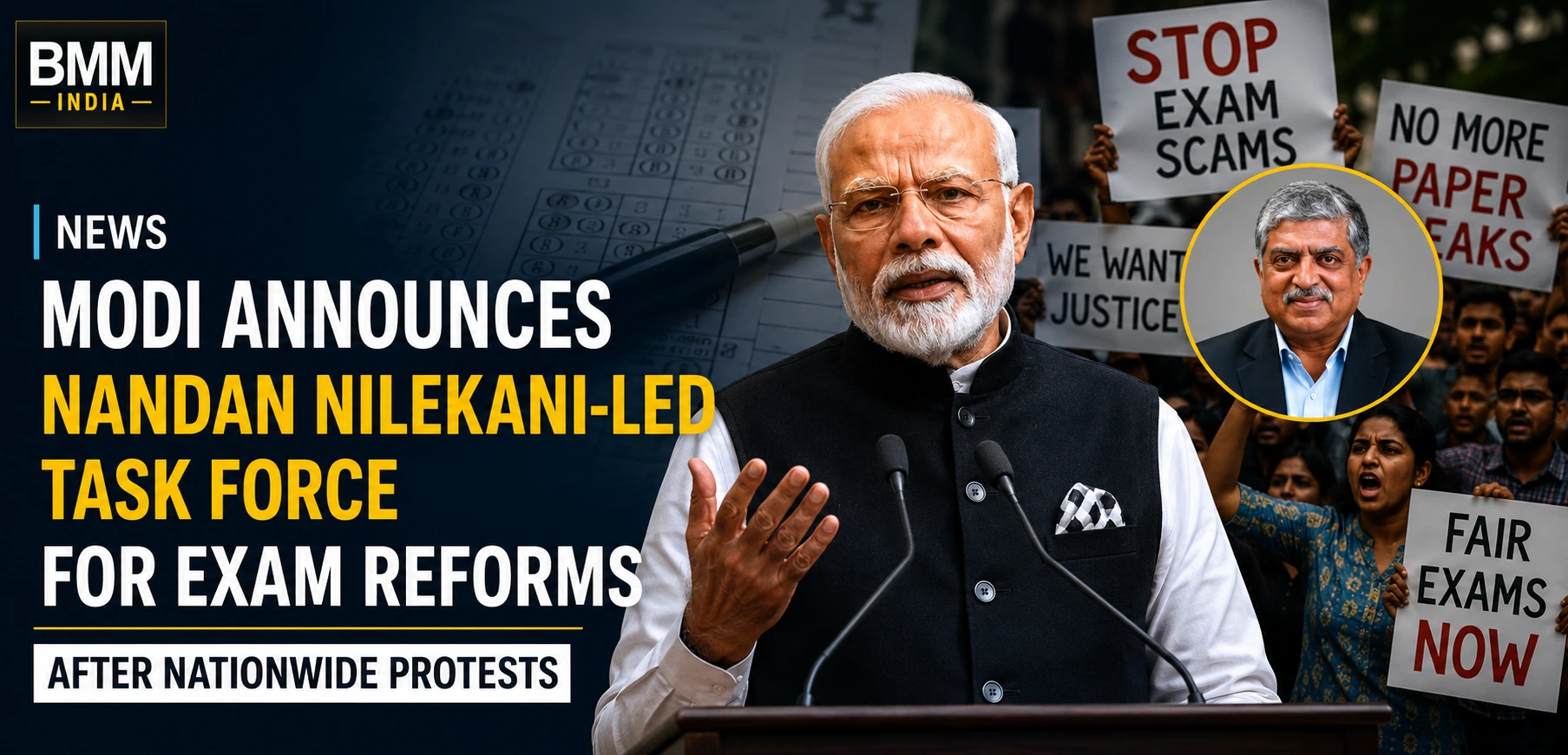
India has unveiled one of its most significant education initiatives in recent years, with Prime Minister Narendra Modi announcing a high-powered task force to overhaul the country’s examination system. The decision follows weeks of youth-led protests over examination paper leaks that raised serious concerns about transparency, fairness, and accountability in competitive exams. The new initiative places Exam Reforms in India at the center of the government’s efforts to restore public confidence in the education system.
A High-Powered Panel to Lead the Transformation
The newly created task force will be led by technology entrepreneur and founder of Infosys, Nandan Nilekani who is well known for his contributions in developing the Aadhaar digital ID program in India. “Modi said that it was imperative that India’s exam system be ‘credible,’ ‘transparent’ and use more technology to avoid such problems in the future.”
This committee is likely to propose changes both structural and technological in nature, making the Exam Reforms in India a matter of priority and not merely a response to a recently exposed problem. In addition to the task force, there will be new laws enacted to provide tougher punishment to those leaking examination papers.
Protests Triggered Immediate Government Action
This move was made after prolonged protests by student unions for accountability following paper leak scandals in competitive exams. Pressure on the government reached an extent where the Education Minister of India Dharmendra Pradhan had to resign, thus making one of the major political events related to the education sector of India.
The protest movement by the youth culminated after the government conceded to many demands made, which included starting Exam Reforms in India, withdrawal of criminal cases registered against protesters, and paying compensation to the parents of students who committed suicide due to the exam controversy
Technology Expected to Strengthen Examination Integrity
In making Nilekani the head of the committee, the government clearly indicates the intention to depend greatly on technological infrastructure. Given his success in handling one of India’s
largest digital identity projects, Nilekani is expected to look into ways of ensuring secure examination procedures as well as malpractice-proofing.
It is believed that technology can greatly help make competitive exams secure and efficient in operation. Provided it is implemented effectively, Exam Reforms in India will bring about great changes in the administration of examinations in India and prevent vulnerabilities causing paper leaks.
Restoring Trust Among Students
Students fight to secure themselves places in universities, professional bodies, and in governmental services every year. Numerous instances of exam malpractice have reduced the credibility of the system, leaving prospective candidates confused after spending years preparing for these highly contested exams.
The new initiative by the government aims at assuring the students that future exams will uphold the standards of transparency, integrity, and accountability. The successful implementation of Exam Reforms in India would require not just technological improvement but also institutional changes.
A Defining Moment for India’s Education System
The establishment of a task force headed by Nilekani is much more than an administrative move, as it signifies a fundamental restructuring in the way that India conducts its public examinations.
Although the suggested reforms have been well received by many and considered a good starting point, the success of this initiative will largely depend on proper implementation and continued political support.
With the beginning of the execution of suggestions of the expert panel, all eyes of students, teachers and policy makers will be on Exam Reforms in India and whether it will be able to create a more secure, open and technologically empowered examination environment.
Also Read : –Delimitation in India: The Political Storm Behind the Women’s Reservation Bill