
Source:- PNC Cognitio School
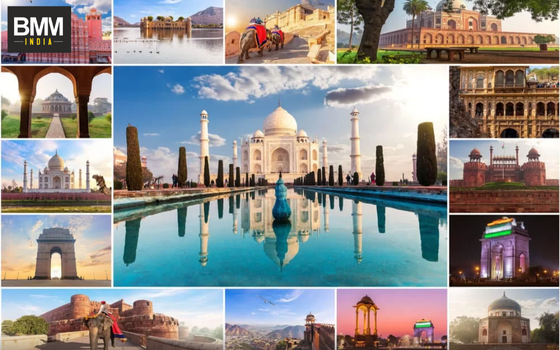
India has a long history and a wide range of cultures. It has been home to many civilizations for thousands of years. There are many India’s Famous Historical Places in the country, such as ancient temples, grand forts, and majestic palaces, that tell stories of kings, empires, and traditions. These places are not only amazing buildings, but they also show India’s social, cultural, and political history. When you visit historical sites, you can connect with the past, see how grand things used to be, and learn about the stories behind each monument. Here are the top ten well-known historical sites in India that every traveler and history lover should see.
Best And India’s Famous Historical Places That Every Indian should Watch One Time in Life
1. Agra’s Taj Mahal
The Taj Mahal is one of India’s Famous Historical Places and a UNESCO World Heritage Site. This white marble mausoleum was built by Mughal Emperor Shah Jahan in memory of his wife Mumtaz Mahal. It is famous for its beautiful architecture, detailed carvings, and perfectly symmetrical gardens. The Taj Mahal, which was finished in 1653, stands for everlasting love and draws millions of tourists from all over the world every year. Photographers love it because it looks so beautiful at sunrise and sunset. i
2. Delhi’s Qutub Minar
Qutub Minar is a tall example of Indo-Islamic architecture in the middle of India’s capital. Qutb-ud-din Aibak built it in the 12th century. It is 73 meters tall and has detailed carvings and inscriptions. The Qutub complex has old mosques, tombs, and ruins that give us a look into the time of the Delhi Sultanate. Qutub Minar is a great example of India’s architectural skill and historical importance.
3. Delhi’s Red Fort
Mughal Emperor Shah Jahan built the Red Fort in 1648. It was the main home of the Mughal emperors for more than 200 years. The fort is a symbol of India’s rich Mughal heritage because of its huge red sandstone walls and impressive gates. It is a UNESCO World Heritage Site and the place where India’s Prime Minister raises the national flag every Independence Day. This makes it a symbol of national pride.
4. The City Palace in Jaipur, Rajasthan
The Jaipur City Palace is in the Pink City of Jaipur and has a mix of Rajasthani and Mughal architectural styles. Maharaja Sawai Jai Singh II built the palace complex in the 18th century. It has courtyards, gardens, and museums with royal artifacts on display. It shows how rich the Rajput rulers were and is an important cultural site in Rajasthan.
5. The Ajanta and Ellora Caves in Maharashtra
The Ajanta and Ellora caves are old rock-cut monuments close to Aurangabad, Maharashtra. Ajanta has Buddhist cave paintings and sculptures from the 2nd century BCE, while Ellora has caves carved between the 5th and 10th centuries CE that are Buddhist, Hindu, and Jain. These caves are special because they have beautiful artwork, are important to religion, and keep India’s spiritual history alive. UNESCO has named both places as World Heritage Sites.
6. Hampi, in Karnataka
Hampi, which used to be the capital of the Vijayanagara Empire, is famous for its ruins, temples, and rocky landscapes. Some of its most famous attractions are the Stone Chariot, the Vittala Temple, and the Virupaksha Temple. Hampi has a one-of-a-kind mix of beautiful buildings and stunning scenery. It is on the UNESCO World Heritage list because of its historical importance and beauty.
7. Mysore Palace in Karnataka
The Wodeyar dynasty lived in Mysore Palace, which is an architectural wonder that mixes Hindu, Muslim, and Gothic styles. The palace is known for its beautiful rooms, big courtyards, and the Dasara festival that happens every year. When the palace is lit up at night, it becomes a stunning sight that draws visitors from all over the world.
8. Fatehpur Sikri, in the state of Uttar Pradesh
Mughal Emperor Akbar built Fatehpur Sikri, which is near Agra, in the late 1500s. This planned city was the Mughal capital for a short time and is home to architectural masterpieces like the Buland Darwaza, Jama Masjid, and Panch Mahal. Fatehpur Sikri is a good example of Akbar’s idea of combining Persian, Indian, and Islamic styles of architecture. It is a UNESCO World Heritage Site and a sign of how creative the Mughal Empire was. It also the India’s Famous Historical Places
9. The Sun Temple in Konark, Odisha
The Black Pagoda, or Sun Temple, was built in the 13th century and is famous for its chariot-shaped structure that honors the Sun God. The detailed stone carvings show scenes from mythology and everyday life, and they show how skilled the people of the time were. The Konark Sun Temple is a UNESCO World Heritage Site that is both a spiritual and architectural treasure.
10. The Khajuraho Temples in Madhya Pradesh
The Chandela dynasty built the Khajuraho group of temples between the 10th and 12th centuries. They are known for their beautiful erotic sculptures and detailed carvings. These temples are an important part of India’s religious heritage and show how art and culture thrived at the time. The Khajuraho temples are a UNESCO World Heritage Site that draws both historians and tourists.
Final Thoughts
India’s Famous Historical Places give us a glimpse into the country’s rich cultural, architectural, and spiritual past. Each monument tells the story of empires, kings, artists, and customs that helped shape the country. These places, like the grand Taj Mahal and Red Fort and the beautiful Ajanta, Ellora, and Khajuraho, show off India’s diversity and timeless beauty. Not only do these historical sites teach us more about our country’s past, but they also make us appreciate it more. Travelers can see the beauty, skill, and history of India’s past by visiting these top ten places.
Also Read :- Business Minds Media India For more information