
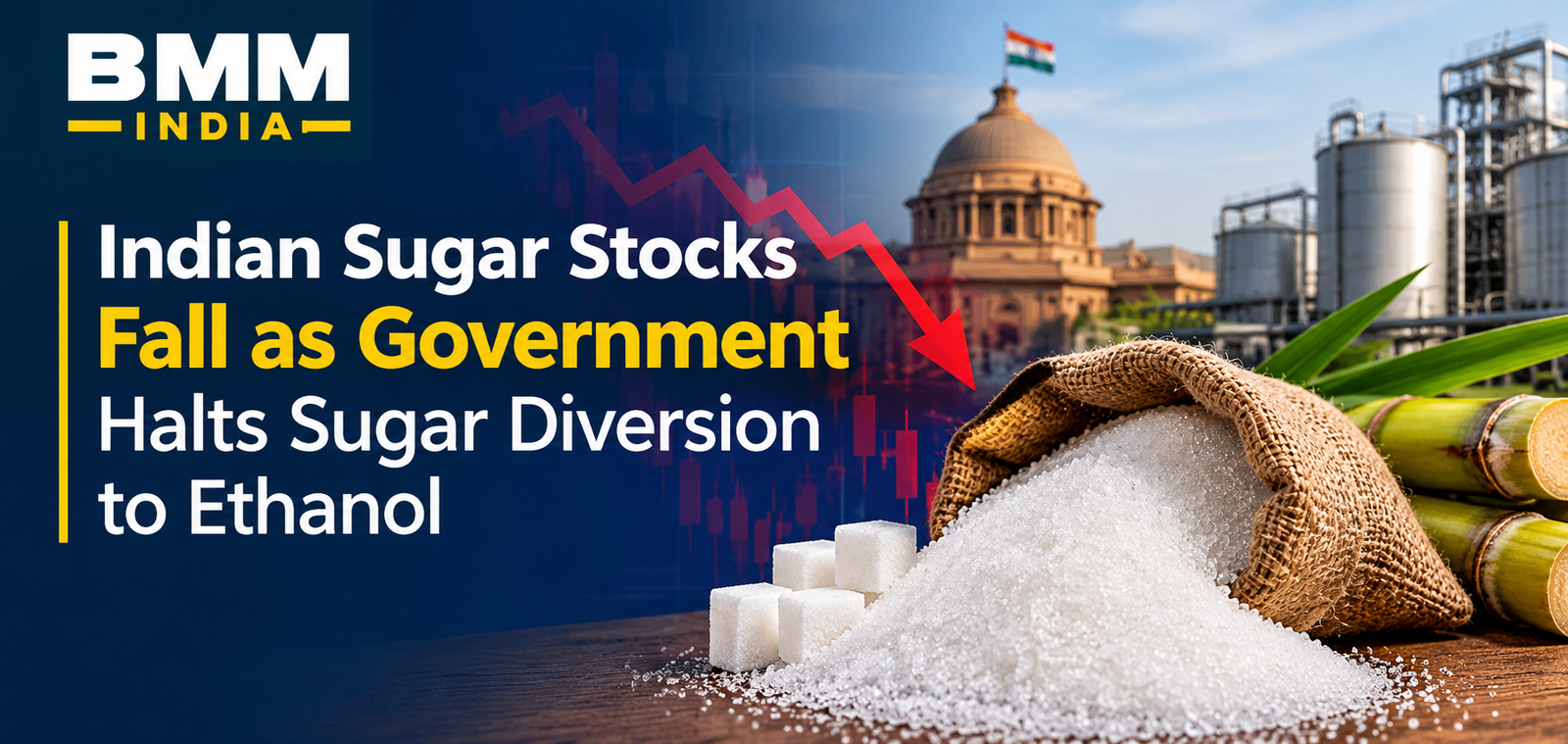
Indian sugar stocks declined on October 19 after the government directed oil marketing companies (OMCs) to stop diverting sugarcane-derived products for ethanol production during the 2026-27 supply year. The decision comes amid rising domestic sugar prices, concerns over lower sugarcane output and efforts to maintain adequate supplies for consumers ahead of the new crushing season.
According to Reuters, shares of several major sugar manufacturers fell between 2% and 6% during morning trade following the announcement. The policy change has raised concerns among investors about profitability, ethanol-related investments and the industry’s ability to adjust production according to market conditions.
Sugar Stocks Slide Following Government Directive
The most recent ethanol purchase bid does not consider ethanol made from sugarcane juice, sugar syrup, and B-heavy molasses, which is an extract from sugarcane that is rich in sugar content. The reason why the government has taken this move is to retain some sugar locally due to escalating prices.
Some of the firms that were affected include Balrampur Chini Mills, EID Parry, Triveni Engineering & Industries, Bajaj Hindusthan Sugar, Shree Renuka Sugars, and Dhampur Sugar, which all saw their shares drop between 2% and 6%.
The dip in Indian sugar stocks is due to fears among investors that the ban on ethanol production from sugar would affect earnings of the manufacturing companies that had invested in distilleries.
Rising Sugar Prices Prompt Policy Intervention
As the largest consumer of sugar in the world, India has witnessed a notable rise in sugar prices due to festive-season demand. Prices have gone up by more than 10%, escalating worries on food price inflation before the major sugarcane crushing season takes off.
The Indian government is trying to increase domestic availability by ensuring that materials from sugarcane are used for making sugar and not fuel.
Weather has also played its part in the worry of supply. Insufficient rains in crucial sugar-producing regions can impact the production of sugar in the 2026-27 season.
This situation has put pressure on the government in maintaining the interests of consumers, food security, and the financial needs of the sugar industry.
Ethanol Investments Face Fresh Uncertainty
The blending program for ethanol in India has resulted in the creation of another market for sugar mills wherein they can produce fuel out of the sugarcane products and at the same time diversify their income sources. The blending program also assists in reducing the reliance of the country on imported crude oil by blending it with the ethanol fuel.
But now the new regulations may hinder the manufacturers’ ability to determine the amount of sugarcane and molasses to be used to produce sugar and ethanol based on the current market conditions.
For those companies which have already invested in ethanol production plants, it is sure to have some effect on their profits and margins.
Balancing Consumer Needs and Industry Growth
The government’s move draws attention to the difficult balance between affordable food and the country’s energy considerations in the long term. Inasmuch as the production of ethanol provides another source of revenue for the sugar mills, the diversion of more sugar into the domestic market might alleviate the problem of supply.
However, the extent to which Indian sugar stocks will be affected depends on a number of variables such as sugarcane production, demand, prices and the capability of manufacturers to adapt.
During the new crushing season, the industry will be scrutinized for evidence of increased supply and stabilized prices. For investors, the initial response of the market brings home the significance of government policy in determining the future of the sugar and ethanol industries of India.