
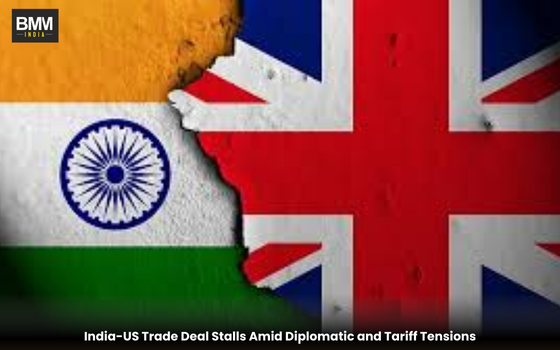
Lutnick Blames Missed Call for India-US Trade Deal Delay
The long-anticipated India-US trade deal has failed to materialise, and US Commerce Secretary Howard Lutnick has offered a blunt explanation. Speaking on the All-In Podcast, Lutnick claimed that the agreement collapsed because Indian Prime Minister Narendra Modi did not personally call US President Donald Trump to close the deal. According to Lutnick, all negotiations were complete, but the final step, direct leader-level engagement, never happened. He described the agreement as “all set up,” adding that Trump is known as “the closer” who finalizes deals personally.
US Expected India-US Trade Deal to Lead the Trade Agenda
Washington had anticipated that the US-India trade deal would be finalized before other regional agreements, according to Lutnick. US officials negotiated later agreements with nations including Indonesia, Vietnam, and the Philippines at relatively higher tariff rates because they believed India would finalize arrangements first. But the US took action when India did not move quickly. Lutnick noted that “the train had already left the station” by the time India indicated readiness, highlighting Washington’s dissatisfaction with the hold-up.
Higher Tariff Landscape Complicates Negotiations
For India, the order of trade agreements has suddenly made things more difficult. Re-examining terms specifically for India has become politically and economically difficult as the US finalized other regional trade agreements at higher rates.
This has intensified India-US trade tensions, especially as tariff structures are central to market access, manufacturing competitiveness, and bilateral investment flows. Analysts note that the delay has weakened India’s negotiating position at a time when global trade dynamics are rapidly shifting.
Trump Backs Bill Proposing 500% Tariffs on Russian Energy Buyers
Adding further strain to bilateral relations, President Trump has endorsed legislation that could dramatically reshape global energy trade. The proposed Sanctioning of Russia Act 2025 threatens tariffs of up to 500 per cent on countries purchasing Russian energy products, including oil. By focusing on Moscow’s main sources of income, the bill, which is backed by US Senator Lindsey Graham, aims to increase pressure on the country. Major purchasers like China, Brazil, and India would be immediately impacted if it were passed.
Impact of Russian Oil Purchases on India-US Relations
India’s continued purchase of Russian crude oil has emerged as a critical friction point in India-US relations. In August 2025, the US imposed 50 per cent tariffs, including a 25 per cent penalty specifically linked to Russian oil imports. Concerns have been expressed in industries like manufacturing, chemicals, and pharmaceuticals as a result of these restrictions, which have also raised costs for Indian exporters. Washington sees the purchases as weakening sanctions against Russia, despite India’s repeated claims that price stability and national interest are the driving forces behind its energy decisions.
Diplomatic Signals of Friendship Amid Economic Strain
Despite the escalating tariff dispute and stalled trade deal, both Trump and Modi have publicly emphasised their personal rapport and strategic partnership. Statements from both capitals continue to highlight defence cooperation, technology partnerships, and shared geopolitical interests in the Indo-Pacific. However, the absence of a concrete trade agreement underscores the gap between diplomatic rhetoric and economic reality.
Outlook for the India-US Trade Deal
The future of the trade agreement between the US and India is still up in the air due to increased tariffs and growing political pressure in Washington. Experts think that in order to restart talks and stop additional economic repercussions, there may need to be renewed leader-level participation. The future actions of Washington and New Delhi will be critical in determining whether the India-US strategic partnership can overcome its current trade and tariff issues as global supply chains reorganize and energy geopolitics escalate.
Also Read :- India Set for Strong 7.4% Growth in FY26 Despite Global Headwinds