
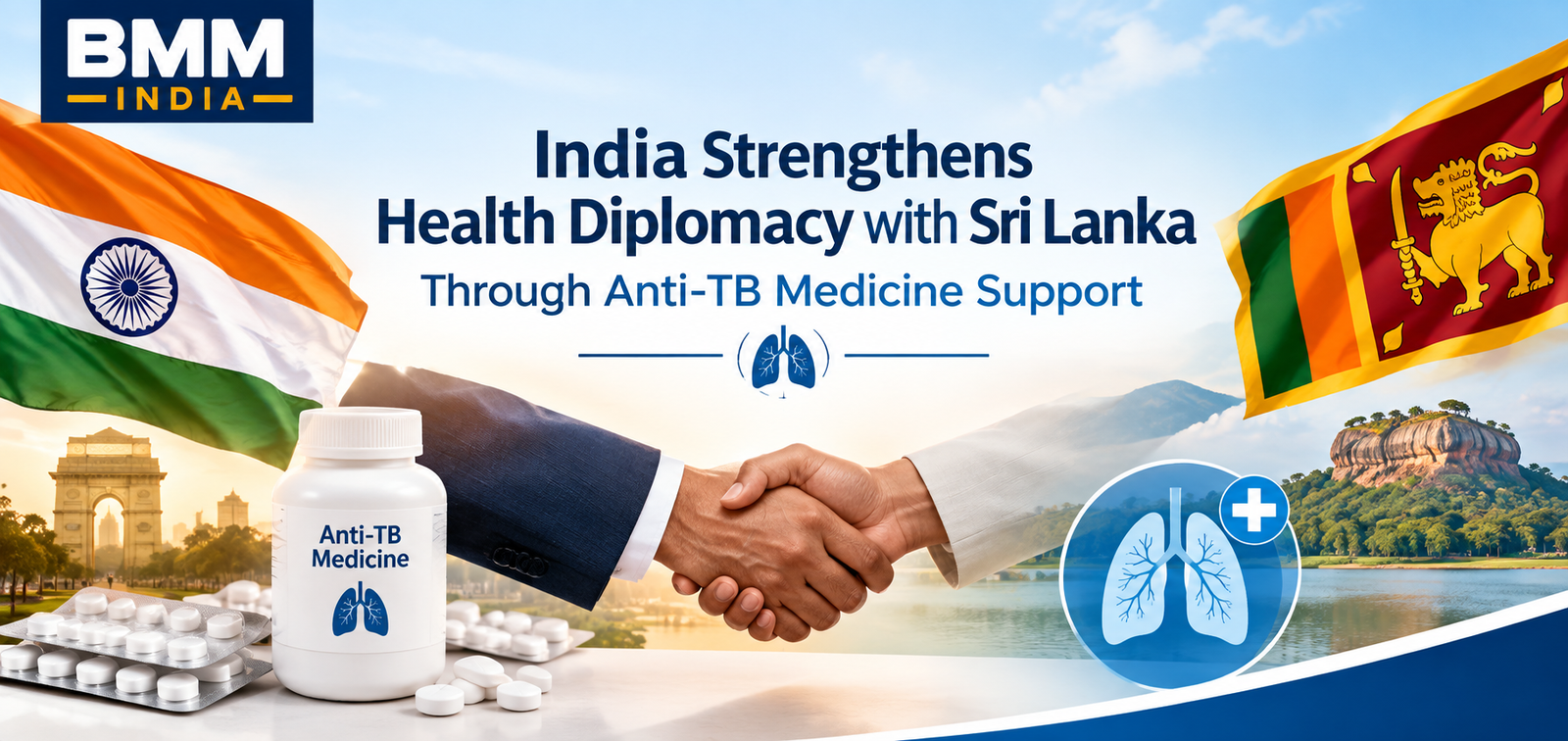
In a significant humanitarian gesture, India has supplied three tonnes of anti-tuberculosis (TB) medicines to Sri Lanka, reinforcing its commitment to regional public health and bilateral cooperation. The consignment was handed over as part of India’s ongoing support for Sri Lanka’s healthcare sector and reflects the growing importance of India-Sri Lanka health cooperation in addressing critical medical needs.
The shipment is expected to help strengthen Sri Lanka’s tuberculosis treatment efforts and ensure uninterrupted access to essential medicines for patients battling the disease. The move comes at a time when healthcare resilience and disease control remain key priorities across South Asia.
Tuberculosis Remains a Major Public Health Challenge
Tuberculosis remains one of the most deadly communicable diseases globally, impacting several millions of people each year. The current global estimate is that more than 10 million people are affected by TB each year. The importance of having a consistent supply of anti-TB drugs cannot be underestimated in the efforts to ensure the continuity of treatment and prevent any cases of drug resistance. The role that India is set to play in this regard will be vital for these disease control efforts.
A Reflection of Growing India-Sri Lanka Health Cooperation
This latest aid is just another indication that the sphere of India-Sri Lanka health cooperation is growing wider and wider. India, indeed, has always been one of the best partners to Sri Lanka in times of need, providing the country with medical equipment, medicines, vital goods, and monetary aid.
The field of healthcare has been increasingly gaining prominence among the spheres of cooperation between India and Sri Lanka. Trade in pharmaceuticals between the two countries has been constantly increasing, as well as talks on establishing collaboration in the production of drugs and innovations in this sphere.
Strengthening Regional Health Security
Healthcare collaboration is now regarded as an integral aspect of regional security. Mutual assistance provided to neighboring countries in times of health crises could help to avoid vulnerability and increase the chances of receiving vital care.
The decision of India to provide the medicines for the treatment of tuberculosis shows the consistency of its “Neighborhood First” policy and willingness to provide necessary medical aid to its neighbors. This policy is aimed at improving ties between South Asian nations.
It is expected that cooperation on public health issues will become even more important in the future due to evolving health problems.
Looking Ahead
The supply of three tons of anti-tuberculosis medicine clearly depicts how beneficial regional cooperation can be in enhancing the quality of healthcare services. Apart from meeting immediate needs, it further helps to strengthen the relationship between these two neighboring nations.
Considering the prevalence of tuberculosis across the globe, the continuous provision of medication is highly significant. The most recent donation by India is an additional instance of successful India-Sri Lanka health cooperation. With both nations increasingly engaging in health and pharmaceutical industries, such programs are expected to boost regional health resilience in the coming years.