
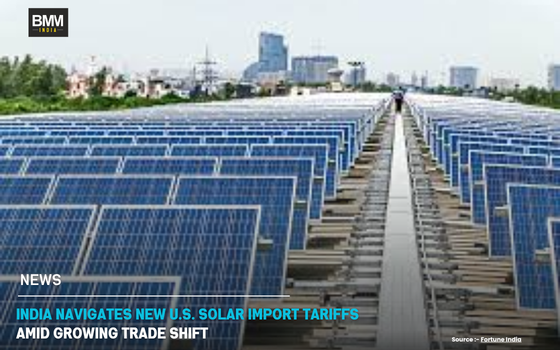
The U.S. Commerce Department has announced preliminary antidumping duties on U.S. Solar cells and panels imported from India, Indonesia, and Laos, marking another major step in the country’s long-running trade battle over clean energy manufacturing. These new solar import tariffs are aimed at protecting domestic manufacturers from what officials describe as unfairly low-priced foreign products entering the American market.
According to the Commerce Department, companies operating in these three countries were found to be “dumping” solar goods into the U.S. market by selling them at prices far below fair market value. As a result, federal officials imposed significant preliminary duty rates: 123.04% on imports from India, 35.17% on imports from Indonesia, and 22.46% on imports from Laos.
These figures show how serious the U.S. government is about strengthening domestic production and reducing dependence on foreign solar equipment.
Why the U.S. Imposed Solar Import Tariffs?
The decision came after a petition was filed by the Alliance for American Solar Manufacturing and Trade, a coalition of U.S.-based solar manufacturers. The group argued that low-cost imports from Asia were harming local factories by making it difficult for American companies to compete on price.
The alliance includes major solar producers such as First Solar, Qcells, Talon PV, and Mission Solar. In their statement, the group said the preliminary findings confirm that producers from the three countries were undercutting U.S. Solar .-made products and distorting market competition.
For domestic manufacturers, these solar import tariffs represent a major victory. They believe stronger trade protections are necessary at a time when the U.S. is investing heavily in clean energy infrastructure and trying to build a stronger solar supply chain at home.
Impact on Global Solar Trade
India, Indonesia and Laos contributed to about 4.5 billion U.S. solar imports last year, which comprise almost two-thirds of the total solar imports into the country. This implies that the new responsibilities may immensely transform supply patterns within the renewable energy sector.
The increased duties have posed significant financial strain to producers in these countries since their products may be significantly more expensive to U.S. customers. This can decrease the demand of imported panels and American buyers can start moving towards domestic suppliers.
Nonetheless, there are industry analysts who caution that increased prices of solar projects in the short term might also be caused by aggressive solar import tariffs. The reliance on imported panels might lead to increased costs to developers, slowing down the rate at which solar installations are done nationwide.
A Continuing Pattern of Trade Enforcement
This is not the first occasion that U.S took such action. In the last ten years, solar imports to the countries in Southeast Asia such as Malaysia, Cambodia, Vietnam and Thailand, have been subjected to similar types of tariffs.
Alliance of American Solar manufacturing and trade has been a significant force behind these investigations. Their success remains to demonstrate that a trade enforcement has become a key element of the U.S. industrial policy in the renewable energy sector.
The new solar import tariffs are a component of a larger policy to make sure that the gains of the clean energy transition also benefit American workers, businesses, and long-term manufacturing.
What Happens Next?
Although these are mere tentative decisions, they have great implications to the industry. Final rulings on solar imports to India and Indonesia are due on July 13, and the final ruling on Laos is due around September 9.
Besides antidumping duties, the agency had already declared preliminary countervailing duties in February, which deal with government subsidies given to foreign manufacturers.
The combination of these steps would transform the solar manufacturing competitive environment in the U.S.
Conclusion
The recent solar import tariffs underscore the increasing conflict between the need to increase access to clean energy and safeguard domestic production. Although the move is welcomed by U.S. solar producers as a way of ensuring a level playing field against competitors, importers and project developers might have new difficulties in cost management.
With the impending final rulings, the solar market across the world will be keeping a close eye. Such decisions would not only impact trade relations, but in the future, they may also determine the future of renewable energy development in the United States.
Also Read :-Tesla Launches Six-Seater Model Y L in India to Expand Premium EV Market Presence