
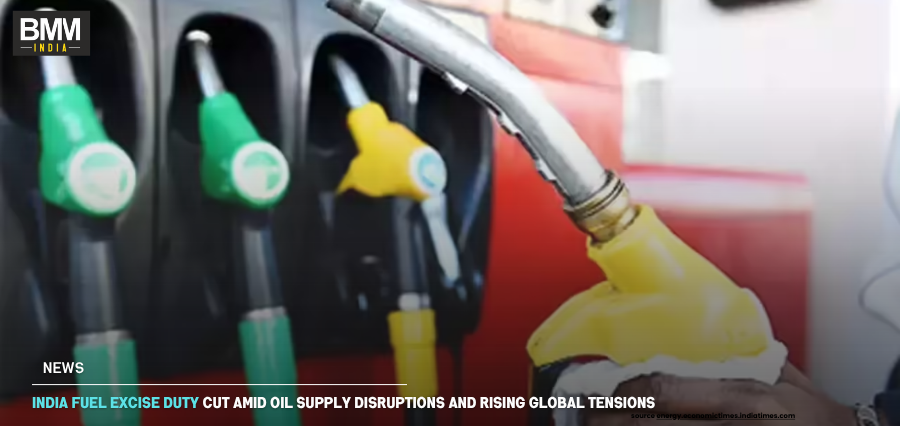
India has announced a significant reduction in fuel taxes as global energy markets face renewed instability. The decision comes at a time when crude oil prices remain volatile due to geopolitical tensions, particularly involving Iran. With India fuel excise duty cut on petrol and diesel, the government aims to cushion the economic impact on consumers and stabilize domestic fuel markets.
Details of the India Fuel Excise Duty Cut
In a government order issued on Thursday, the finance ministry reduced the special excise duty on petrol from 13 rupees per litre to 3 rupees. Diesel saw an even sharper revision, with duties cut from 10 rupees per litre to zero. This move marks one of the most substantial reductions in recent times and reflects the urgency of the situation.
The India fuel excise duty cut is expected to provide immediate relief to consumers facing rising fuel costs. It also offers support to oil marketing companies that have been under pressure due to fluctuating crude prices and shrinking margins.
Global Crisis and Supply Chain Disruptions
The backdrop to this decision lies in escalating tensions involving Iran, which have disrupted critical global oil supply routes. The Strait of Hormuz, a vital passage that handles nearly 40 percent of global crude oil shipments, has faced near closure. This has significantly impacted shipping routes and the availability of oil and gas supplies worldwide.
For a country like India, which relies heavily on imports to meet its energy needs, such disruptions pose a serious economic challenge. The reduced flow of crude oil has contributed to price volatility, making it increasingly difficult for governments and companies to maintain stability in domestic markets.
Economic Impact and Fiscal Concerns
As much as the tax cuts should reduce the burden of the consumer, it will incur a huge fiscal cost. The estimated effect on the government finances may be about 1.55 trillion rupees yearly as per the economist Madhavi Arora of Emkay Global.
In spite of this, the move is regarded as necessary to counter the losses incurred by the oil marketing firms. It is estimated that the reduction of the duty would consume between 30 and 40 percent of their annual losses on auto fuels at the current prices. This balancing exercise puts into the picture that the government tries to benefit both the consumers and the industry stakeholders at the same time.
India’s Energy Dependence and Policy Approach
India is the third largest importer and consumer of oil in the world, and more than 90 percent of the energy requirements are satisfied by imports. This high dependency exposes the country specifically to global supply shocks.
As compared to other countries like China, India has not limited the export of refined fuels. Rather, the government has been emphasizing the stable domestic supply chains. The governments have stressed that proper preparations have been made to satisfy basic requirements, such as fertilizers to use in farming and coal to produce electricity.
Impact on LPG and Household Consumption
There are other impacts of the disruptions in the world, which are not just limited to petrol and diesel. India used 33.15 million metric tons of cooking gas last year with imports of cooking gas amounting to approximately 60 percent. Middle East imports make up a large share of the total imports of almost 90 percent.
The cost of energy to the house is directly impacted by any form of instability in the region, and so, the government interventions are even more vital. India fuel excise duty cut, although directed at the transport fuels, represents a larger approach to controlling energy affordability in sectors.
Balancing Relief and Responsibility
India fuel excise duty cut is a good intervention at a time when there are uncertainties worldwide. Though it brings a lot of relief to the people and helps oil industries, it is also burdening the state budgets. With geopolitical tensions still affecting the energy markets, the situation in India is showing how flexibility and strategic policy formulation are important. The next few months will play a significant role in defining how well the country may strike a balance between economic and energy security in a global environment that is getting more unpredictable.
Also Read :- LPG Shortage in India Sparks Rush for Electric Cooking Appliances