
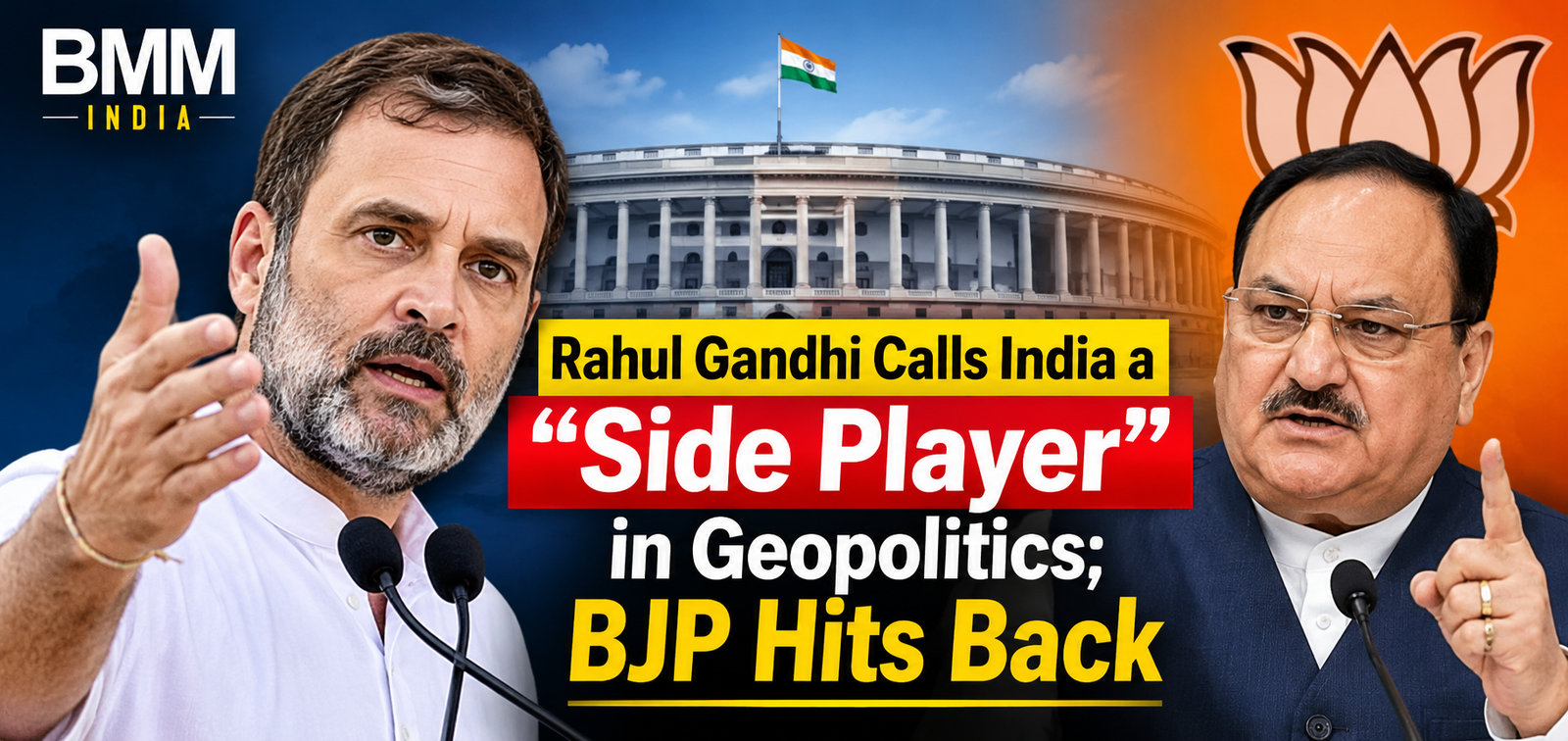
The latest row over Rahul Gandhi geopolitics comments began at the University of Chicago. Gandhi told students that India has become a “side player” in global affairs, pointing to the part Pakistan played in negotiating peace between the US and Iran. He did not stop at criticism. He said India’s size naturally gives it a global voice and that it should be actively involved in global conversations.
The event was titled “The Iran War & India’s Role in the World”, and it was part of a short US trip. He spoke with political science professor Robert Pape.
The Core Argument
As mentioned earlier, what Gandhi tried to convey through this statement is that India had an advanced understanding of international relations, but today it finds itself marginalized while other countries make big decisions. This comparison with Pakistan is what made the statement politically explosive. To Gandhi’s supporters, it was a harsh criticism of India’s foreign policy. To his critics, it was a misstep.
The BJP Fights Back
The reaction was swift. According to Hindi newspaper Amar Ujala, the BJP called Gandhi “fan boy” of Pakistan for making such a statement in Chicago and wondered why he has such an attachment to that country. Keywords in the article indicate BJP spokesman Pradeep Bhandari as one of the figures behind the reaction.
“Fan boy” was not a new term for the BJP either. It used the same term against Gandhi in September 2025 when former Pakistani cricket player Shahid Afridi praised him during an interview in a TV show. This means that the Chicago spat is another episode in this ongoing tradition of the BJP criticizing Gandhi’s foreign policy through Pakistan.
Beyond Foreign Policy
But the geopolitical observation was not the only issue that caught the attention of the BJP. The party claimed that Gandhi was attempting to destabilize the democracy of India from outside. At the very same conference in Chicago, he talked about Indian democracy being “sacred” and denied the idea of boycotting elections, for that would be the end of democracy.
A similar kind of criticism also came his way from his previous visit to New York where he made some controversial statements at Columbia University on economy and unemployment. Thus, both of these incidents provided BJP with regular material.
Two Competing Readings
According to defenders, a Leader of the Opposition has every right to challenge the policies of the government on the matter of foreign affairs. According to them, it is completely appropriate for Rahul Gandhi geopolitics commentary to be a part of the political discourse. India’s reputation is a valid topic of discussion, whether it comes up anywhere.
To the BJP, however, such views being expressed abroad would harm India’s image and the mention of Pakistan would give succor to its rival party. It is not the first time the party has used the logic, but the “fanboy” remark is the new twist to its old argument.
Not much has changed in this case, as in any other case of political commentaries abroad by Indian politicians.
Why It Matters
It serves to illustrate how foreign policy has increasingly come to be a battleground for the Congress and BJP. Whether India is an influential power or a mere “bit-player” can hardly be decided by using a single statistic, namely one peace process. However, the label has stuck and geopolitics of Rahul Gandhi is going to be an issue that both parties would go back to again and again.
This is only the beginning. With Gandhi continuing his US trip, there will be more comments and counter-comments.