
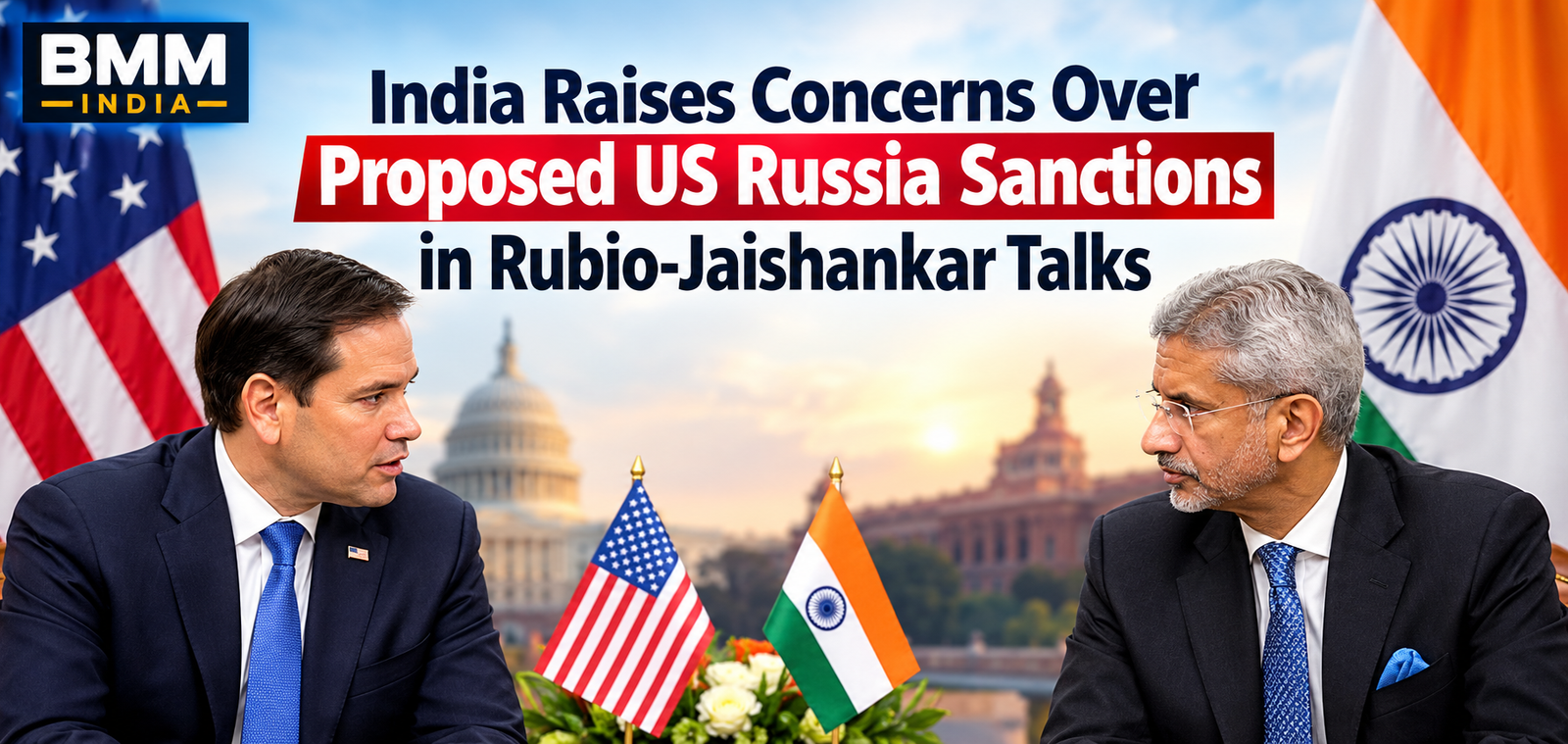
India has raised strong reservations over proposed United States measures targeting countries that continue purchasing Russian energy, with External Affairs Minister S. Jaishankar conveying New Delhi’s position during discussions with US Secretary of State Marco Rubio. The conversation comes amid growing uncertainty surrounding Washington’s efforts to increase economic pressure on Moscow over the ongoing Ukraine conflict.
According to reports, Jaishankar emphasized that India’s energy decisions are guided by national requirements and the need to ensure affordable supplies for its population. The discussion highlighted what officials described as India Russia sanctions concerns, particularly regarding the potential impact of secondary sanctions or punitive tariffs on countries importing Russian oil.
Why the Issue Matters for India
India continues to be among the largest consumers of energy in the world and has ramped up its purchases of cheap Russian crude following the escalation of hostilities between Russia and Ukraine. Russian oil has been vital for helping India keep its fuel prices low and maintain energy security.
Under the proposed legislation, the US administration will be able to slap tariffs of up to 100% on nations that import large quantities of Russian oil. Experts feel that India and China may be among those nations that will be affected by the move.
For India, the matter is not simply about the purchase of energy. New Delhi has cautioned that punitive action might harm ties between the two nations in many areas.
These developments have intensified India Russia sanctions concerns among policymakers and industry stakeholders alike.
Jaishankar Reiterates India’s Position
In his recent discussions with American representatives, Jaishankar stressed again that India follows a policy of strategic autonomy and national interest.
Jaishankar previously stated that international disputes cannot be settled through restrictions only but require diplomatic and political solutions. India’s position is dictated by its traditional approach of having connections with several states in the world without being tied to any particular geopolitical bloc.
Officials insist that India’s decisions about purchasing energy are determined not politically but economically.
The latest diplomatic engagement sought to ensure that Washington understands the practical implications of any sanctions regime on India’s economy and energy sector, further underscoring India Russia sanctions concerns.
Impact on Trade and Energy Markets
Sanctions experts point out that the new set of sanctions may result in ramifications that go beyond bilateral relations. India happens to be the third-biggest importer of crude in the world, and any interference in its supply chain would influence the global oil market. An increase in the cost of oil may cause inflationary pressures.
Recent statistics show a reduction in the imports of Russian crude by India, as the country’s refiners are looking for other suppliers of the product in the Middle East. However, Russia is still an important supplier to India.
Industry insiders state that the uncertainty about possible US steps has caused Indian refiners and traders to reconsider their strategies. It has added another dimension to India Russia sanctions concerns.
Broader Diplomatic Implications
It comes at a crucial point in India Russia sanctions concerns when both nations are involved in talks about trade and regional security, among other things. Despite growing strategic relations, Russia is a thorny issue in the relationship.
India always maintains that energy security cannot be ignored while ensuring safety for the more than 1.4 billion Indian citizens. Meanwhile, Washington insists on gaining greater international backing in their efforts to put economic pressure on Russia.
Outlook
With the ongoing diplomacy talks, both parties will look into how they can find means of reconciling their differences without compromising their strategic partnership. On one side, securing energy supplies is an important issue for India, whereas putting economic pressure on Russia is something that the United States wants to achieve. It will be interesting to see the outcome of the talks, which will have significant implications for the global energy industry.