
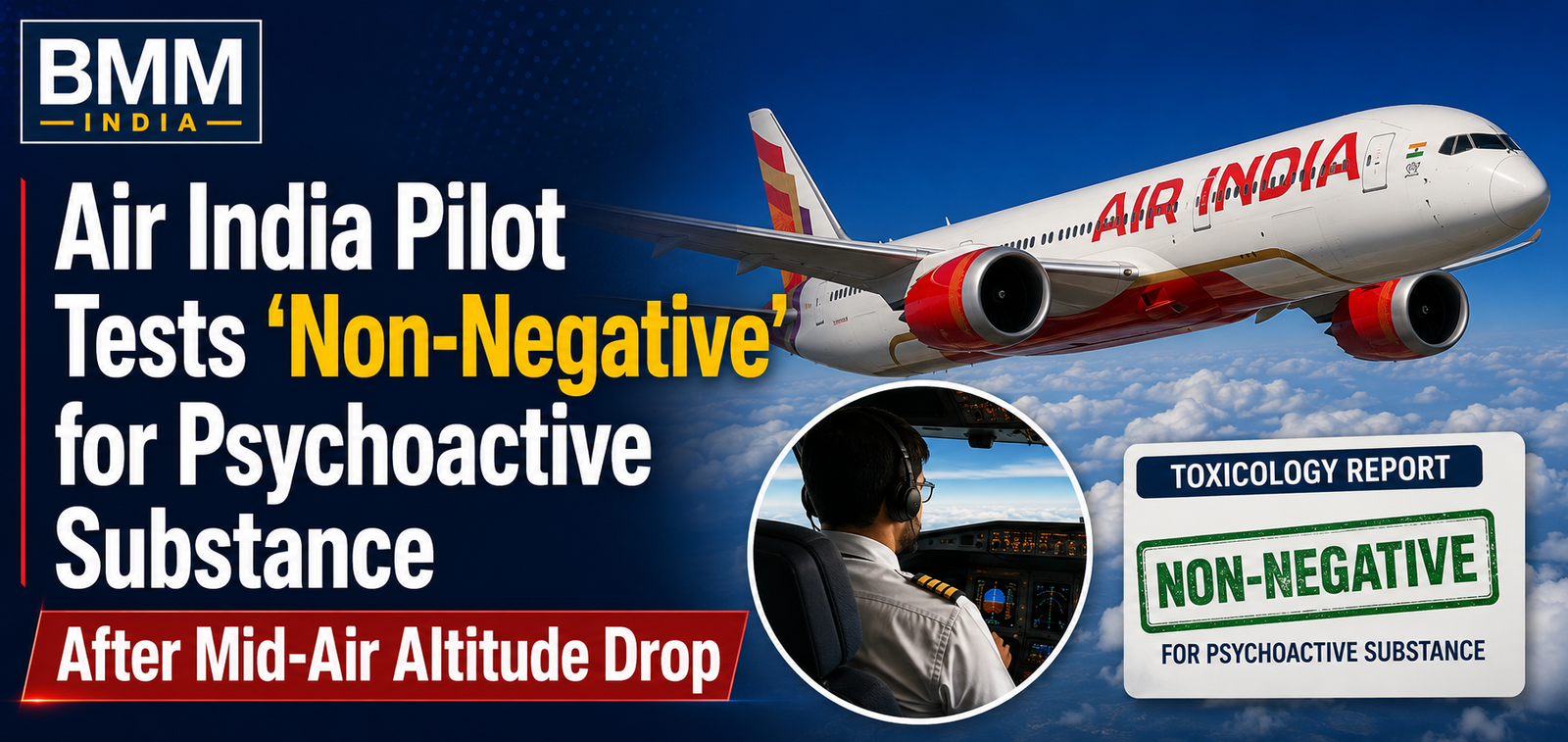
An official preliminary report into a severe mid-air turbulence incident on an international flight has raised major aviation safety concerns. A confirmatory test revealed that the Air India pilot tested “non-negative” for a psychoactive substance following an incident in which the aircraft rapidly dropped 300 feet during cruise.
The investigation, monitored by aviation authorities, highlights a combination of technical control failures and human element concerns during the flight.
Sudden Altitude Loss and Onboard Injuries
The event occurred on flight AI2379, which was scheduled for Phuket to New Delhi. When the aircraft was cruising over the Bay of Bengal after clearing the coast of Odisha, there was a sudden and drastic fall in altitude of about 300 feet.
The fall caused injuries to 20 passengers and 4 crew members of the aircraft. According to the initial report, the sudden movement was due to severe turbulence in the atmosphere. However, the technical explanation revealed the cause of the sudden movement as a failure in the flight control system. The altitude loss occurred because of reduced hydraulic pressure in the Green, Blue, and Yellow hydraulic systems of the aircraft.
Technical Log Discloses Multiple Flight Warnings
Data extracted from the aircraft’s Centralised Fault Display System (CFDS) revealed a cascade of system warnings during the flight:
- Hydraulic and Autopilot Failures: At least nine warning messages appeared within a single minute, indicating low hydraulic pressure, an elevator flight-control fault, and an automatic autopilot disconnect.
- Door Sensor Alerts: Minutes after the altitude loss, two separate warnings were logged regarding emergency-exit door sensors.
- Anti-Ice and Secondary Disconnects: Later during the flight, an engine anti-ice system fault occurred, followed by a second autopilot disconnect event.
Pilot Investigation and AAIB Recommendations
Alongside this technical study, the drug test conducted on the flight crew indicated serious implications. The confirmatory drug test indicated a “non-negative” test outcome for the Air India pilot, thus verifying the presence of the psychoactive substance which had been suspected in an earlier test as being marijuana.
It should also be highlighted that according to sources familiar with the investigation, the Air India pilot had slept for about 30-35 minutes while flying in the air.
In light of the seriousness of the matter, the Aircraft Accident Investigation Bureau (AAIB) indicated that the presence of the psychoactive substance is a serious threat to the safe operation of flights. The AAIB has informed the Directorate General of Civil Aviation (DGCA) about taking immediate regulatory measures against the Air India pilot.
Ongoing Inquiries and Regulatory Impact
News coverage has refocused attention on the protocols for pilot health checks, rules for in-flight rests, and aircraft maintenance procedures. Where at first the weather played a primary role in news coverage, the facts about hydraulic problems and crew members being impaired have made operational lapses a more important issue.
Air India and the regulatory authorities have cooperated with AAIB in carrying out a thorough investigation. A comprehensive report, including information about mechanical failures and what the Air India pilothas done, is to be released after the investigation is completed.