
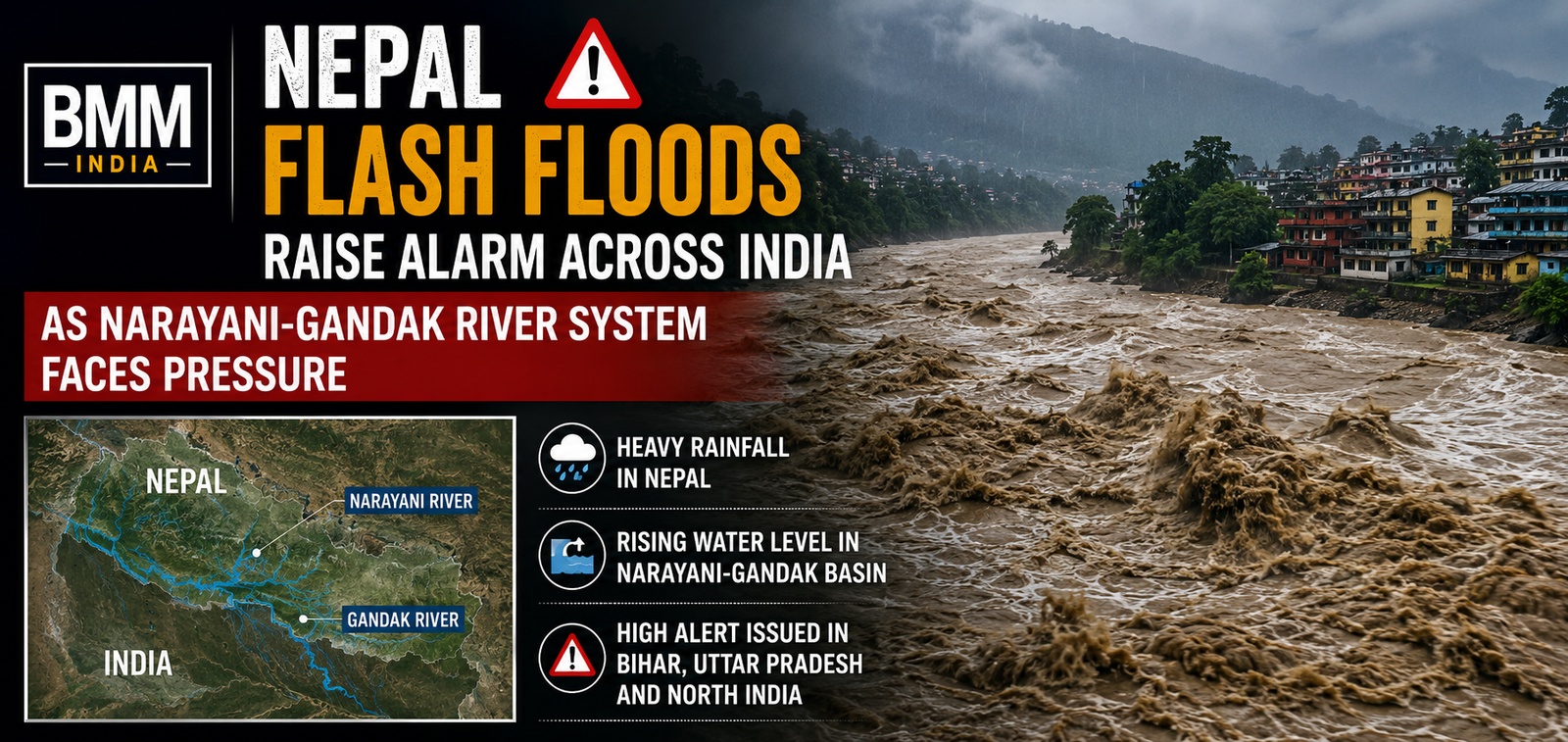
A terrible flash flood in Nepal has brought to light yet again the threat posed to communities living on the Narayani-Gandak River System, a transboundary river system linking Nepal and northern India. The floods that came after a major glacial break in the Himalayan area have caused considerable fatalities, damage to infrastructure, and fears in the downstream areas of the Indian states of Bihar and Uttar Pradesh.
According to reports from Nepal, hundreds of people have been killed, and hundreds more are missing due to the flash floods that hit valleys and villages around the Nepal-Tibet border.
What Triggered the Disaster?
As stated by experts and government agencies, the flooding was due to the collapse of part of the Himalayan glacier. This resulted in the formation of an enormous amount of ice, rocks, mud, and other debris flowing into the river channels, causing an enormous flash flood to occur. In the initial stages, it was believed that the cause was seismic activity, but after further investigation, it was found that the seismicity was caused by the collapse of the glacier itself.
This incident is yet another wake-up call for the increasing dangers posed by the instability of glaciers in the Himalayas.
Why the Narayani-Gandak River System Matters
Narayani-Gandak River System plays an important role in connecting the river basins of Nepal with the northern parts of India. In Nepal, the river is known by the name of Narayani, while on entering into India, it assumes the name Gandak River and drains into the basin of Ganges. With this common river system, any occurrence in Nepal impacts millions of people residing downstream of India.
Due to this connectivity, any unusual occurrence like floods that may occur in Nepal, river level becomes an issue of concern for Bihar and Uttar Pradesh in India.
Bihar and Uttar Pradesh on High Alert
After the floods, officials from Bihar and Uttar Pradesh have issued warnings and increased monitoring. Emergency response personnel have been asked to be prepared for possible rises in river levels, while citizens in risky areas have been asked to be on their guard and take official advice.
Bihar is very sensitive to events in the Narayani-Gandak River System due to its past experience of floods. Many parts of northern Bihar face frequent floods from rivers that originate in Nepal.
Climate Change and Growing Flood Risks
A recent disaster has once again brought up discussions on climate resilience in the Himalayan region. It has been observed that glaciers all over the Himalayas have changed drastically because of temperature increases. With the increasing rate of retreat and formation of hazardous glacial lakes, the chances of flash floods are rising.
In the case of shared river basins like in Nepal and India, this problem goes way beyond just being an emergency issue. Investments in early warning, hydrological monitoring, and disaster management strategies will be required for safeguarding communities linked by the Narayani-Gandak River System.
The Need for Cross-Border Cooperation
As rescue operations proceed and authorities keep track of the consequences of the disaster, the tragedy becomes another example of the increasing problem of environmental threats caused by climate change in one of the most sensitive environments in the world. Strengthening regional coordination and investing in resilient infrastructure may prove critical in reducing the impact of future floods across the Narayani-Gandak River System.