
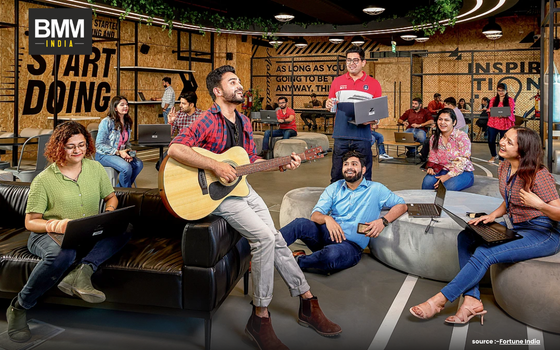
A generational shift is reshaping boardrooms, office floors, and hiring strategies across the country. As fresh graduates and young professionals enter the workforce in large numbers, Corporate India Meets Gen Z is no longer a sociological observation. It is a structural transformation that is redefining workplace culture, leadership expectations, and organizational priorities.
Born into a hyperconnected world, Gen Z employees bring different assumptions about flexibility, purpose, technology, and transparency. For Corporate India, adapting to these expectations is no longer optional. It is essential for talent retention and long-term competitiveness.
Corporate India Meets Gen Z in a Post-Pandemic Workplace
The timing of this shift is significant. Corporate India meets Gen Z at a moment when remote work, hybrid offices, and digital collaboration tools have already altered traditional corporate norms.
Companies such as Tata Consultancy Services, Infosys, and Wipro have had to rethink workforce models after the pandemic normalized distributed teams.
Gen Z employees, many of whom began their careers during lockdown years, often see location flexibility as a baseline expectation rather than a perk. Fixed nine-to-five office routines are increasingly questioned. Output and impact matter more to them than physical presence.
This has pushed organizations to redesign policies around hybrid work, digital monitoring, and performance evaluation.
Purpose Over Paycheck
The other feature of Corporate India Meets Gen Z is the focus on purpose-driven employment. Although pay is still a significant consideration factor, Gen Z employees tend to value meaningful work, social and ethical purpose.
There is a higher propensity for them to judge firms according to sustainability programs, diversity pledges, and corporate governance policies. The employer branding is now affected by environmental, social, and governance frameworks in a manner that was scarcely the case ten years ago.
The sustainability goals and digital transformation are higher and higher in the list of large conglomerates like Reliance Industries and Aditya Birla Group to appeal to young talent.
Corporate India meets Gen Z in an environment where there should be transparency. Employees would like to know what the decisions made by the leadership relate to the impact on society.
Feedback, Hierarchy, and Communication
The Indian culture of traditional corporate has traditionally appreciated hierarchy and respect to seniority. Corporate India Meets Gen Z is a generation that embraces a structure of flatter communication and frequent feedback loops.
The gen Z employees are used to immediate digital interaction. They would desire to see performance discussions more often instead of yearly performances. They feel freer to debate and give recommendations even on very junior levels of their career.
This change has necessitated a change in leadership styles by the managers. The models of coaching and mentorship are substituting command and control structures. Internal communication systems are becoming more interactive, and transparency is developed through town halls and online Q and A.
The transition is never smooth all the time. Misunderstandings that may emanate between generations may be based on work pace, expectations, and tone of communication. Organizations that promote communication are, however, likely to sail through these changes.
Technology as a Cultural Anchor
Corporate India Meets Gen Z in a deeply digital environment. For this generation, technology is not an add-on but an extension of daily life.
Workplaces are integrating advanced collaboration tools, AI-driven analytics, and digital learning platforms to align with this mindset. Gen Z employees expect seamless digital experiences, from onboarding processes to internal communication systems.
Upskilling is another priority. Online certifications, micro learning modules, and continuous professional development programs are increasingly embedded into corporate structures. Companies recognize that retaining Gen Z talent requires clear growth pathways and skill enhancement opportunities.
This technological integration is also influencing recruitment. Social media presence, employer review platforms, and digital branding now play a central role in attracting candidates.
Mental Health and Work-Life Balance
The meeting of Gen Z and Corporate India in a super digital world. Technology is not an add-on to the everyday life of this generation, but an extension.
To meet this type of thinking, workplaces are adopting superior collaboration tools, AI-driven insight, and digital learning platforms. Gen Z workers want their experiences to be smooth online, including the onboarding procedures and the internal communication solutions.
Another priority is upskilling. Micro learning modules, online certifications, and continuous professional development programs are becoming more and more integrated into the corporate structure. Business organizations have acknowledged that to keep Gen Z employees, they must offer them explicit growth opportunities and skill development avenues.
Recruitment is also getting affected by this technological integration. Social media activity, employer review site and online branding have become key factors to attracting candidates.
Entrepreneurial Aspirations Within Corporate Structures
Another dynamic shaping Corporate India Meets Gen Z is the entrepreneurial mindset. Many young professionals are open to side projects, freelance opportunities, and startup ambitions alongside corporate roles.
Rather than viewing this as disloyalty, some companies are exploring intrapreneurship programs. Innovation labs, internal startup incubators, and cross-functional project teams are becoming more common.
This approach allows organizations to channel Gen Z creativity while maintaining engagement. It also signals that career growth does not have to follow a rigid ladder.
Challenges and the Road Ahead
Corporate India Meets Gen Z is taken positively, and yet there are challenges. The movement of the younger employees between jobs has accelerated, and this has increased their rate of attrition. Companies need to invest in quality interactions as opposed to financial incentives.
Flexibility and accountability are another task that is delicate to balance. In hybrid models, it is necessary to have a clear picture in terms of expectations and deliverables.
The wider change seems to be irreversible despite these complications. The Corporate India meets Gen Z when demographic changes are in place make sure that younger professionals will be the backbone of the workforce in the years to come.
A flexible, purpose-driven, digitally integrated, and conversational workplace is also likely to be found in the future in India. The firms that evolve proactively will not only be able to attract talent but also promote innovation and strength.
Corporate India Meets Gen z does not make an attempt to be a fad but a specific development. No longer is the question whether change will take place, but how successful the organizations will be in taking it in.
Also Read :- Business Minds Media India for More information